

Follow Us On:




Posted On: May 26, 2026
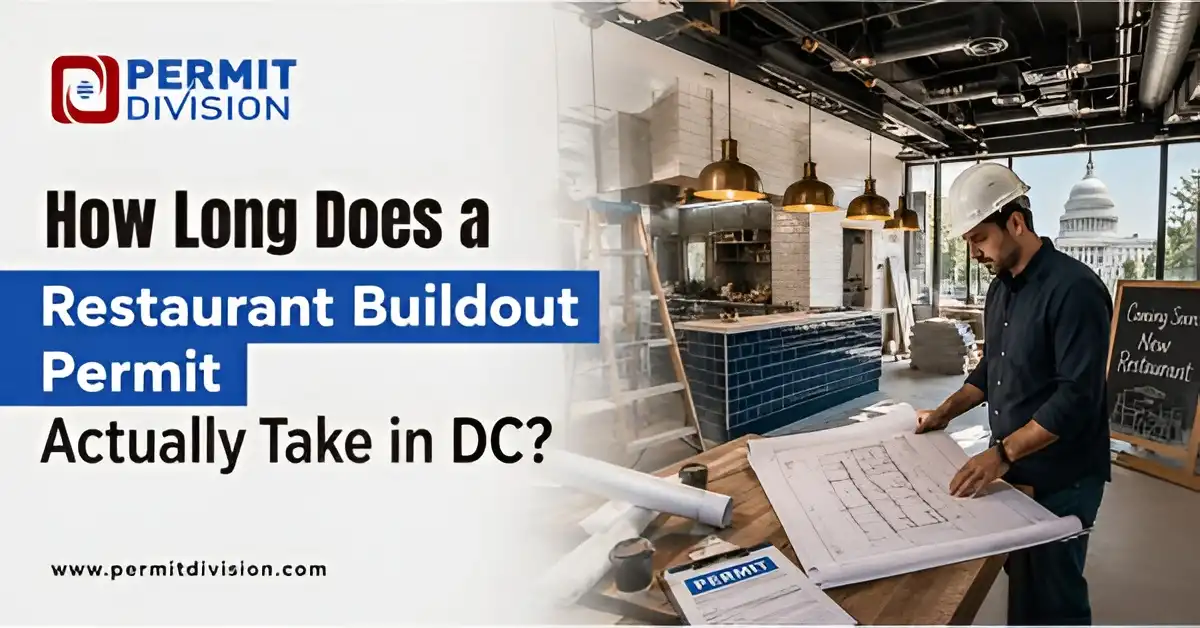
How Long Does a Restaurant Buildout Permit Actually Take in DC?
You found the space. You signed the lease. Now comes the part nobody warns you about: the permit.
In Washington, DC, a restaurant buildout permit doesn't run on your timeline. It runs on DCRA's. And if you've never dealt with DC's Department of Consumer and Regulatory Affairs before, the wait times alone can derail a lease, burn through reserves, and push an opening date by months. This is what the actual timeline looks like, what a Permit Expediter in DC does to compress it, and how Commercial Permitting Services work in practice.
The Real Timeline: How Long DC Restaurant Permits Actually Take
Standard commercial building permits for a restaurant buildout in DC run between 90 and 180 days through the conventional DCRA review queue. That's three to six months before a single wall comes down.
Here's what's stacked in that window:
Building Permit (DCRA): The base permit covering structural, electrical, mechanical, and plumbing work. Standard review runs 8 to 12 weeks. Complex projects with full mechanical systems or structural changes can push past 16 weeks.
Certificate of Occupancy (CoO): Required before you open doors to the public. A separate application, a separate queue. Add 4 to 6 weeks after the buildout passes inspection.
DC Health Department Permit: Plan review for food service operations adds another 3 to 5 weeks for approval after submission.
ABRA License (if serving alcohol): The Alcoholic Beverage Regulation Administration runs its own 90 to 120-day protest period entirely outside of DCRA's process. You cannot shortcut this one. It runs in parallel, but if you're not running it from day one, it becomes the last thing holding you back.
Add it up. A restaurant with a full bar, new mechanical systems, and no prior food service use on the certificate runs into a 6 to 9-month permit process before a single customer sits down.
How a Permit Expediter in DC Cuts That Timeline
A Permit Expediter is not a fixer. They're a licensed professional who knows how DCRA's internal routing works, which reviewers flag which issues, and how to preempt rejections before they cost you four weeks.
Here's what they actually do:
1. Pre-submission review. Before the drawings go in, an expediter reads the set for common DCRA rejection triggers improper egress calculations, missing ADA compliance annotations, and mechanical details that don't match DC's energy code. One missed line item sends a full set back. Expediters catch these first.
2. Intake and tracking. DCRA's online portal, ProjectDox, is functional but not intuitive. Expediters know the submission requirements per project type, submit the correct document package on the first attempt, and monitor review status daily rather than waiting on automated notifications.
3. Reviewer relationships. DC's plan review staff rotate by discipline. An experienced expediter knows which reviewers handle which project categories and can direct questions through the right channels. That speeds comment resolution from weeks to days.
4. Expedited review programmes. DCRA offers a paid expedited review track for eligible projects that can cut standard review time from 8 to 12 weeks down to 15 to 20 business days. An expediter evaluates eligibility, prepares the supplemental application, and manages the fee structure.
5. Multi-agency coordination. DCRA isn't the only agency touching your project. Health, Fire Marshal, DDOT (if there's a sidewalk café or valet plan), and ABRA all run separate reviews. A Permit Expediter in DC coordinates these simultaneously so you're not staggering delays.
The difference in practice: projects managed through professional Commercial Permitting Services from day one typically reach permit issuance in 45 to 75 days. The same project submitted cold by an owner or architect unfamiliar with DC's process routinely hits 120 to 150 days.
Case Study 1: Shaw Neighborhood Buildout, 2022
A DC restaurant group converting a former retail space in Shaw into a 60-seat full-service restaurant submitted their permit package without an expediter. The initial submission came back with 14 DCRA comments across three disciplines. Each response cycle took 3 weeks. By the time the permit issued, 22 weeks had passed. The ABRA application, filed the same week as the building permit, had cleared 11 weeks earlier. The group paid rent on an unopened space for five months. After that project, they retained a permit expediter for their next two locations. Both permitted in under 60 days.
Case Study 2: H Street Corridor Buildout, 2023
A single-operator fast-casual concept on H Street NE engaged a DC permit expediting firm from the first day of design. The expediter reviewed the architectural drawings during initial phase (design development), flagged two code conflicts before final drawings were produced, and submitted a complete package to DCRA on the first attempt. The project entered expedited review, cleared comments in one cycle, and was issued in 38 business days. The operator opened 11 weeks after lease commencement. The expediting fee was $4,800. The savings in avoided delays: five to six weeks of rent on a $9,000/month lease.
Permit Division: How It Fits Into Your Project
Understanding how the division works matters. Applications enter a queue. Each discipline reviewer works independently. A single outstanding comment from one reviewer holds the entire permit. Permit Division does not proactively notify applicants of comments in real time; applicants and their representatives must monitor the system and respond within defined windows or risk the application expiring.
Permit Division also administers DC's Over-the-Counter (OTC) review for smaller-scope projects: minor alterations, limited interior non-structural work, and tenant fit-outs below certain thresholds. An OTC review can be issued the same day. Experienced expediters know exactly which scopes qualify, and when a project can be structured to take advantage of this track without compromising the buildout plan.
For restaurant projects specifically, Permit Division coordinates with the DC Department of Health's Food Safety and Hygiene Inspection Services Division, which must sign off before a Certificate of Occupancy is issued for a food service operation.
Knowing the Permit Division's internal process, review timelines by discipline, and comment resolution protocols is what separates a 45-day permit from a 150-day one.
Frequently Asked Questions
1. Do I need a separate permit for kitchen equipment installation?
Yes. In DC, commercial kitchen equipment such as hood systems, gas lines, and grease interceptors requires separate mechanical and plumbing permits in addition to the base building permit. These are submitted concurrently but reviewed separately.
2. Can my architect submit the permit without a permit expediter?
Yes. Architects can submit directly. Many DC architects do. However, unless the architect has active experience navigating DCRA's ProjectDox system and responds to review comments within the required windows, you should budget for the standard 90 to 150-day timeline.
3. What happens if my permit application expires?
DCRA applications expire if applicants fail to respond to comments within 30 days or fail to pick up an issued permit within 60 days. An expired application restarts the process from scratch. A permit expediter monitors deadlines and prevents expirations.
4. Does a change-of-use trigger additional requirements?
Yes. Converting a space from retail, office, or any non-food service use to a restaurant is a change of use and triggers a full building code review, updated Certificate of Occupancy, ADA compliance review, and DC Health plan review. This is one of the most common reasons restaurant buildout timelines run long.
5. How early should I engage Commercial Permitting Services?
Before you finalise your lease. The permit timeline directly affects your rent commencement calculations. Engaging a permit expediting firm at the Letter of Intent stage lets you build a realistic pre-opening schedule and negotiate appropriate rent abatement periods with the landlord.
Ready to Open Faster?
Permit Division provides end-to-end commercial permitting services for restaurant buildouts across Washington, DC. From pre-submission drawing review to Certificate of Occupancy, our team manages the full permit process so your architect can focus on the build and you can focus on the opening.
Contact us today for a free permitting timeline assessment.
Call us at +1 (844) 573 7648 / +1 (202) 967 6566 (WhatsApp).
Website: - https://www.permitdivision.com/
Licensed Permit Expediters serving DC, MD, and VA.
Article Author

Arobit
Blog Admin
Tags
Latest Posts




Similar Posts
Copyright 2026 -
permit division. All Rights Reserved.Get Your Free Consultation

