

Follow Us On:




Posted On: June 13, 2026
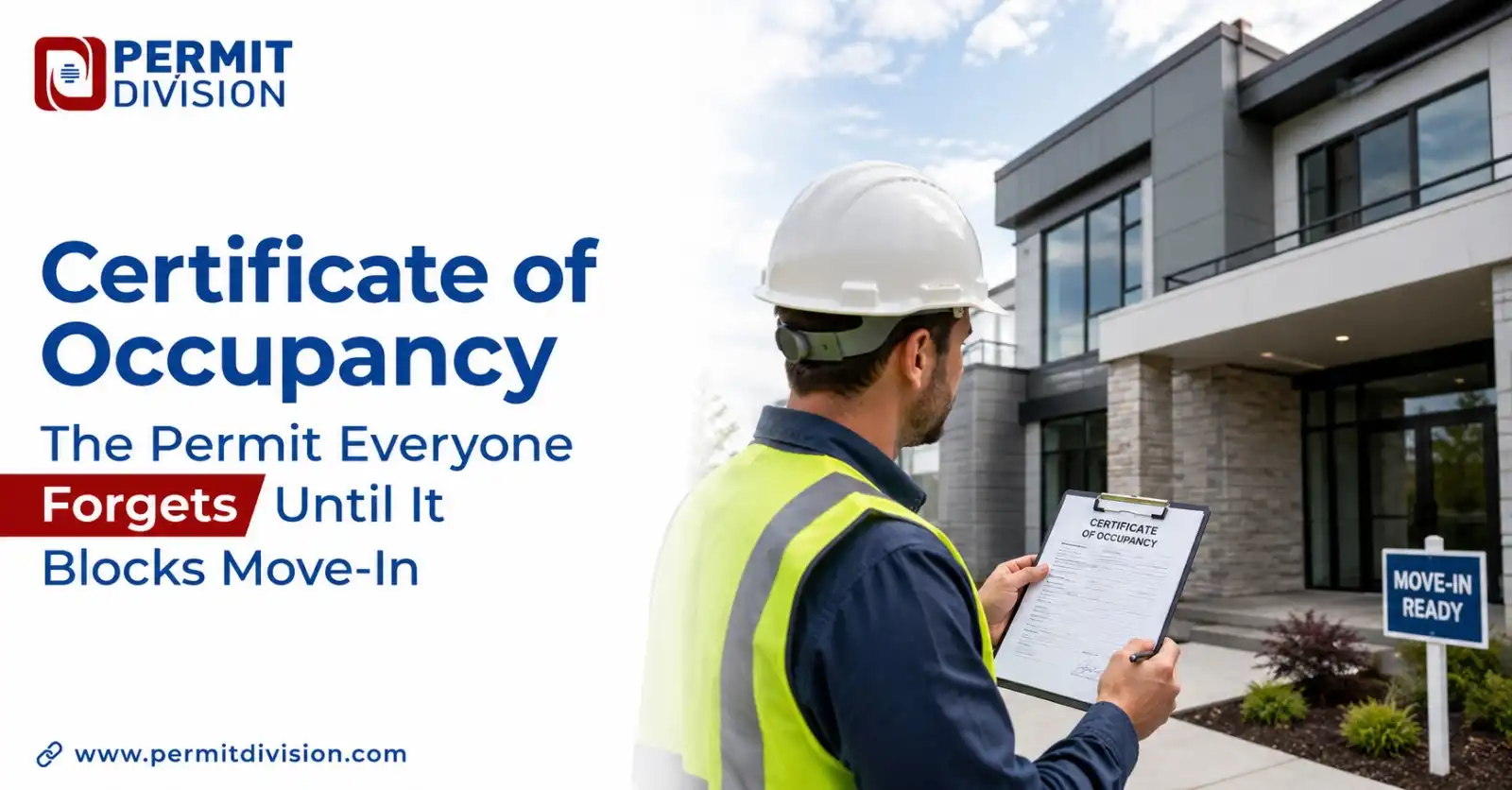
Certificate of Occupancy — The Permit Everyone Forgets Until It Blocks Move-In
You have passed every inspection. Contractors are packed up. The furniture is staged. The business is ready to open. Then someone mentions the Certificate of Occupancy is missing, and the whole schedule falls apart.
This happens to developers, business owners, and general contractors across DC, Virginia, and Maryland all the time — because the CO gets treated as a formality rather than a planned milestone. By the time people call a permit expediter, they've already lost weeks.
What is a Certificate of Occupancy (CO)?
A Certificate of Occupancy (CO) is a document issued by the local building authority confirming a structure is safe to use for its intended purpose. It's issued after construction ends and once all inspections pass. No CO means no legal occupancy – for residential move-ins, commercial openings, and tenant fit-outs alike.
Three types come up most often on commercial projects:
Full CO — Issued when construction is complete and all inspections are finaled. Required for new builds.
Temporary CO (TCO) — Allows partial occupancy while minor outstanding items are resolved. Common in phased commercial projects where some floors or suites are ready before others.
Change of Use CO — Required when the building's designated use changes. Converting office space to retail? Restaurant to a gym? You need a new CO even on a decades-old building with no structural changes.
That last one surprises most clients. The existing CO only covers the previous use. The moment the use changes, the building must demonstrate code compliance for the new use — fire safety, egress, accessibility, mechanical ventilation, and all of it — regardless of how much prior work has been done.
Why the CO Gets Missed
Permitting isn't a single linear process. It's layered – site permits, trade permits, inspections, and final sign-offs across multiple agencies. The CO sits at the end of that chain. When earlier stages fall behind, the CO gets deferred but rarely flagged on the project schedule as an active risk.
There are jurisdictional gaps, too. DC, Virginia, and Maryland operate different agencies with different timelines and different documentation requirements. What gets a building to final occupancy in Virginia may require additional submittals in DC. Firms offering commercial permitting services locally know these differences by default. Project teams managing permitting in-house often don't find out until they miss something.
Case Study 1: DC Restaurant Group, 2022
A mid-size restaurant group converted a former retail space into a second DC location. They had the building permit in hand and finished construction on schedule. What they hadn't planned for: the retail-to-restaurant change of use required a new CO, and DC's Department of Buildings had a documented inspection backlog at that time, extending commercial conversion processing by 60 to 90 days.
The restaurant sat dark for 11 weeks past its planned opening. Fixed costs – staff on payroll, rent, and equipment leases – ran throughout. Industry estimates for a mid-size DC restaurant put holding costs between $1,500 and $3,000 per day. Nothing had failed. There was no code violation. The delay was pure scheduling — the CO process wasn't started in parallel with construction.
A permit expediter brought in during the final construction phase would have identified the backlog early, pre-filed the application, and tracked it through DOB review — compressing the timeline by weeks.
Case Study 2: Northern Virginia Office-to-Medical Conversion, 2023
An outpatient medical group leased space in a Northern Virginia office building and planned to open within four months of lease signing. The existing CO covered the space as general office use. Medical occupancy is classified separately under Virginia's Uniform Statewide Building Code, with specific requirements for ventilation, plumbing, and ADA compliance that standard office configurations don't meet.
The contractor pulled a renovation permit without flagging the use-change. The CO application wasn't submitted until construction was complete. Virginia's building department then required additional plan reviews, a fire marshal inspection, and ADA documentation that hadn't been prepared during the design phase. The final CO came seven months after the lease start date.
The scope of construction consulting services on that project didn't include anyone tracking CO-specific requirements from the lease stage. That single gap doubled the timeline.
What a Permit Expediter Actually Does Here
Filing paperwork is the smallest part of it. A permit expediter tracks where each application sits in the review queue, follows up with agency reviewers, catches missing documentation before it triggers a rejection, and recommends strategies — like applying for a Temporary CO — that allow partial occupancy while remaining items are resolved.
On commercial projects, the real value comes before construction starts. Knowing the CO requirements at the design stage means the architect designs to meet them rather than working around them later. That one sequencing shift prevents most of the delays outlined above.
Commercial permitting services built around permit expediters consistently close projects faster than those managing permitting internally. The cost of bringing one in early never exceeds the cost of holding a finished building while waiting for a document.
Frequently Asked Questions
1. Do I need a CO for a renovation if the use isn't changing?
Depends on the scope. In DC, Virginia, and Maryland, significant work — structural changes, new mechanical/electrical/plumbing systems, anything requiring a building permit — typically requires a final inspection and a CO update. Cosmetic-only work usually doesn't. Check with the local building department or a commercial permitting services provider before construction begins, not after.
2. How long does it take to get a CO?
It varies by jurisdiction and project type. DC standard commercial CO applications usually take 30 to 45 business days for straightforward projects. Change-of-use projects run longer, especially during high-volume periods. Northern Virginia counties like Arlington and Fairfax process faster than smaller localities. Maryland timelines range from 2 to 8 weeks depending on the county and project complexity.
3. What is a Temporary CO and when should I use one?
A TCO lets you occupy a completed portion of a building while certain items are still being resolved. A restaurant might open the dining room on a TCO while the rooftop bar's ventilation system is being finalised. TCOs have expiration dates and need active tracking. Your permit expediter should manage extensions and the conversion to a full CO before the TCO lapses.
4. Who is responsible for getting the CO — the owner or the contractor?
It depends on the contract. GCs often manage permitting as part of their scope, but the CO is issued to the property and primarily protects the owner. On most commercial projects, owners engage a permit expediter or construction consulting services to handle CO filings independently of the GC — especially when schedule certainty matters.
5. Can a permit expediter help after a CO rejection?
Yes. Rejections come with a correction notice listing specific deficiencies. A permit expediter reviews each item, coordinates with the design team or contractor to address them, and resubmits — usually with direct follow-up to the reviewer, confirming the corrections. Resubmissions managed this way move significantly faster than cold resubmissions.
How Permit Division Helps You Get Your CO in DC, VA, and MD
Permit Division specialises in Certificate of Occupancy filings across Washington DC, Virginia, and Maryland. From change-of-use applications to Temporary CO management and final occupancy approvals, their team knows each jurisdiction's process, timelines, and documentation standards — so your project doesn't stall at the finish line.
Don't let a missing CO push your opening date. Contact us at +1 (844) 573 7648 / +1 (202) 967 6566 or visit our website https://www.permitdivision.com/ today and get a licensed permit expediter on your CO from application to approval.
Article Author

Arobit
Blog Admin
Tags
Latest Posts
-
ADU Permits in MD & VA: Rules, Restrictions, and Costs for 2026
-
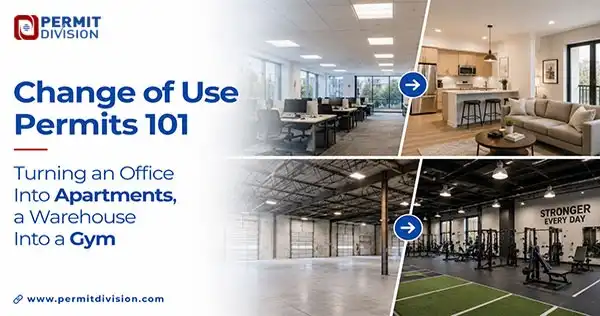
Change of Use Permits 101: Office to Apartments, Warehouse to Gym
-
How Long Does a Restaurant Buildout Permit Actually Take in DC?
-

Loudoun County Home Additions: Permit Guide for Building Out
-

When Does a Home Project in Loudoun County Need a Permit?
Similar Posts
-
ADU Permits in MD & VA: Rules, Restrictions, and Costs for 2026
-
Change of Use Permits 101: Office to Apartments, Warehouse to Gym
-
How Long Does a Restaurant Buildout Permit Actually Take in DC?
-
Loudoun County Home Additions: Permit Guide for Building Out
-
When Does a Home Project in Loudoun County Need a Permit?
Copyright 2026 -
permit division. All Rights Reserved.Get Your Free Consultation

